Showing posts with label waterhole. Show all posts

Tuesday, March 22

Mokala National Park - A gem of semi-arid savannah


Situated only 20 kilometers south of Kimberley, the Mokala NP is the newest of the South African National Parks.

It has 3 of the Big 5 African mammals, but it's primary focus is the rare antelope of Southern Africa.

This image is taken looking south-west over the open grasslands of the Lilydale section towards the dolerite hills and bushveld of the Mosu section. 

Note the red kalahari sand in the foreground.

On my first full day in the park I had wonderful sightings in the grasslands.......

a solitary Gemsbok (Oryx)
 

Roan Antelope
 

I spent some time at the lookout point over this waterhole in the middle of the grasslands, and had a herd of Eland antelope run past, without pausing, and then this small group of Tsessebe run down to the water.

 Most of the summer rainfall areas of South Africa have had a really good season this year and the grasslands were lush with most of the antelope looking fat and in good condition.

Eland

Tsessebe

Later in the morning I went south-west to the bushveld and saw many more tsessebe, giraffe, springbok, zebra, warthog and so on.

I also got a punctured tyre!! - the camel thorn trees in this part of the world have vicious thorns!!

Tsessebe

Tsessebe female and calves


Plains zebra and a midday drink
 

On day 2, after getting my tyre fixed at the nearby little settlement of Modderrivier, I had another great day in Mokala. 

This time I went meandering through the dolerite hills and valleys, which had abundant game, and then on west to the far side of Mokala, seeing more game in the flat, lush, thorn tree park lands.

Warthog close to camp

Buffalo sheltering from the heat


A herd of springbok coming down to drink.


Red hartebeest

Plains zebra

Gemsbok (Oryx)

Giraffe


I would definitely like to visit Mokala again, and perhaps stay in the other rest camp, Mosu, which is located in the hilly southern section.

I can also recommend Lilydale camp where I stayed this time. It's on the high bank above the Riet River and has glorious views. I include below, the view from my chalet's deck at 3 different times of the day.

Early evening and sundowner time

 Clear skies, and my first ever attempt at photographing the stars!

Dawn on my last morning


There had been some distant wildfires the previous day, so a little smoke in the atmosphere produced these wonderful colours the next morning.

This little gem of a park is well worth visiting. The official website recommends a minimum of 2 nights, but I spent 3 nights and had no time to get bored. 

So on your next road-trip between the south and north, or west and east of South Africa, plan to stop here for a few nights.


Thursday, December 12

Transport Dam on a hot, hot summer morning

Recently I had the rare privilege of having the morning in Kruger all to myself and I took off to explore for a little while.

It was steamy hot, already 30 degrees by 8.00 am, but after decent rains the week before, followed by a few days of sunshine, the bush had exploded with vibrant spring greens, yellows and reds.

After already having some amazing elephant encounters, I paused for a little while at Transport Dam to see what might happen.

It was very quiet, a few birds and the resident pod of hippo keeping a low profile.

Movement in the bushes at the distant top end of the dam alerted me to elephants approaching.

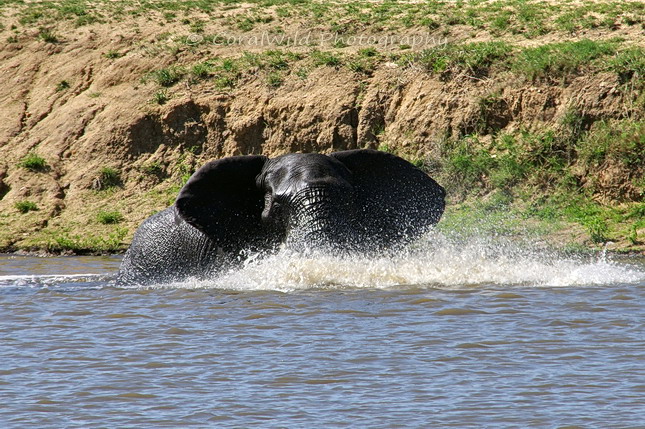
For the next 20 minutes, these three elephant bulls, who came in for a drink and then "cool-off" kept us all totally entertained.

The following pictures don't need much further explanation!


Friday, January 4

October to January, Dry Season to Wet Season - A dramatic contrast

Sunset over the Great Escarpment and the Valley of the Olifants
Since October I've been fortunate enough to have been back on safari to Kruger several times.

It's been a really good re-introduction to safari life and a great reminder of why I love this work so much.

Looking over my photos from the last 3 months I also realised how quickly and dramatically the bush changes from the scorched earth of spring and the drawn out end of the dry season, to the lush green vegetation that seems to appear so abruptly once the rains arrive.

This year, the rains delayed and delayed, but since arriving in late December, they have made up for lost time with endless grey, drizzly days interspersed by frequent deluges.

These photos are some of my favourites of the last 3 months and also show quite clearly the transition from dry to wet..........

Mid October


When we went out on our first afternoon game drive in the Balule, these lions were still chewing on a baby giraffe they had killed much earlier that day.


After dark the cubs were allowed onto the carcase, and once their bellies were full they thirstily gulped water from the nearby waterhole.


Other highlights from our October safari......

The rare Black Rhino - not much nourishing green in that mouthful
Displaying a little aggression on approaching the lodge waterhole
My best photo ever of a Steenbok
Black-backed Jackal
A stately Waterbuck
November

Pied Kingfisher
An amazingly close encounter with a Verreaux Eagle-Owl

Kruger does have some evergreen vegetation, trees that grow on the riverbanks or in wetter areas, giving these birds that lovely green backdrop.

By the end of the dry season one can see the river courses from quite a distance away, the only green visible in thousands of square kilometres.
 
Much to the relief of the browsers (giraffe, kudu etc.) Kruger's acacia trees start coming out in their spring leaf well before the rains arrive. 

For me it's always a slightly bizarre sight - dry, sun-bleached veld dotted with the vibrant spring green of the acacias.

A multitude of different animals at Transport Dam
By the end of November there had been a few days with scattered thunder showers - just enough to get a sprinkling of green grass in some areas, but the large waterholes were still the only places the wildlife could drink.  (there were also buffalo and rhino at this waterhole)

January

And after just a couple of weeks of rain...........
Lots of babies around by mid-summer
This bull elephant was enjoying the lush green grass around & under the bushes

After a night of exceptionally heavy rain, this leopard mother had just caught an impala and was watching her cub enjoy it's meal.


Thursday, September 29

The Dazzling Zebra of Etosha


 Five years ago, some friends & I spent an unforgettable week in Etosha National Park, Namibia.

Beneath wide, open, endlessly blue skies, across white, dusty flats and in thick green mopani shrub we found zebra at every possible waterhole...........
 
 They stood stoically out under the blazing sun...........


nervously drank from predator-haunted pools.........


enjoyed a moment of time standing hock-deep in the cool water.......


or just rested from their endless quest for grass.................


For other postings on Etosha and zebra, try these links........