Showing posts with label fish. Show all posts

Wednesday, January 20

A pause to review, recharge, renew (and some random photos)

On the road through the Free State, January 2016

When are we ever sure what tomorrow, next week, next month or the next year is going to bring?

I know that in two days I'll be in Kruger on a private trip/holiday/course and then travelling the Garden Route to Cape Town in the first 2 weeks of February.

After that..............??

It's quite liberating, hitting the pause button on life, and letting the ideas, inspirations, thoughts roll through the mind.

The only thing I know for sure is that I won't be looking for more guiding work this year - I want to spend some time exploring my country, my continent and maybe my planet.

I'll definitely want to share with you, my loyal readers, whatever I do - it just won't be as a Safari Guide.

To keep you entertained in the meantime, I'll share with you on this blog the photos from my archives that  I've been posting on my Facebook page (so apologies to my regular Facebook followers) - with the little blurb that goes along with them.

This is the selection from this last week.......


Fridays are Rhino awareness days. So I started my sequence of #animalphotooftheday postings last week with this picture taken in 2012, somewhere in or around Kruger.

We were very priviledged to witness this endangered Black Rhino drinking at a waterhole. He posed quite beautifully for us too!


Cape Cormorants at Cape of Good Hope  (November 2015)

Not the best photographic conditions but I liked how this one came out after a little editing!


A rather magnificent "hopper" found in the vineyards of the Breede River Valley, Western Cape (October, 2015)


This is an "oldie" - taken in Kruger NP in 2008, but it's still one of my all time favourites.....

Baboons by the Sabie River - July 2008


Hot summer afternoons....
On tour over Christmas, our normal 2 night stop in Hermanus was changed to Pringle Bay due to accommodation issues.
This little beach had incredible views across False Bay. On the horizon you can just make out the Cape Peninsular  (Pringle Bay, Western Cape, December 2015)

The early morning hunt..... we were very lucky to spot this cheetah (one of a 2 male coalition) on an early morning game drive!  (Kruger National Park, July 2015)


Going up Table Mountain is a "must" for any visitor to Cape Town.
This is a view from the cable car on the way up - Lion's Head on the left, Sea Point below and Table Bay with Robben Island in the distance.

February 2015


The misty sunrise one morning reminded me a little of the sunrises I use to see over the Indian Ocean when walking the dogs before work in Ponta do Ouro, Mozambique.
I plan to be back on the beach before too many more months pass!

Mozambique, June 2011


I'm looking forward to planning a diving trip to Sodwana Bay this year, so I've been having a look at some of my underwater animal pics.
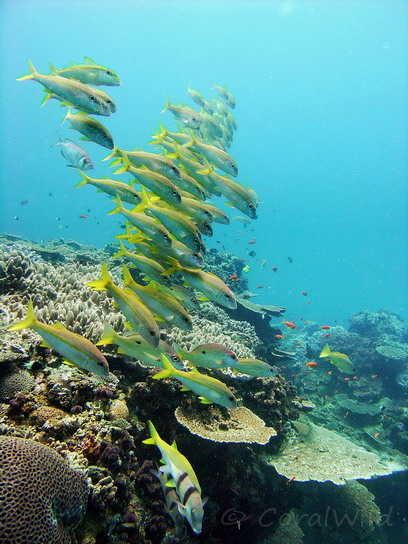
Anton's Reef - at the southern end of "2 mile" reef, always has spectacular shoaling fish.

Always makes for a good photo, even with my "limited" underwater camera ;)

Sodwana Bay, Kwa-Zulu Natal, January 2007


And moving away from Africa..... I last visited the US in 2007 and I've done very little with the photos from that trip. I had an amazing holiday and had a huge amount of fun playing with my first DSLR camera.
Staying in New York with a "local" meant that we did some stuff not quite on the usual tourist check list - like walking across the Brooklyn Bridge...

New York, June 2007


I'm often asked by my safari clients what my favourite animal is.
A short answer is that I don't have one. Like most things in life, it all depends on the last encounter, highlight or experience with any animal in "the wild".
If there is an exception, it would be the African Elephant. Any day I spend in an African wilderness or conservation area without seeing an elephant seems, somehow, incomplete.
This magnificent bull elephant we saw facing off with another bull on the sand banks of the Letaba River. (I posted about it previously on this blog way back when...Shadow-fight

Kruger National Park, March 2013

Monday, January 5

Sailing Ningaloo Reef, Australia

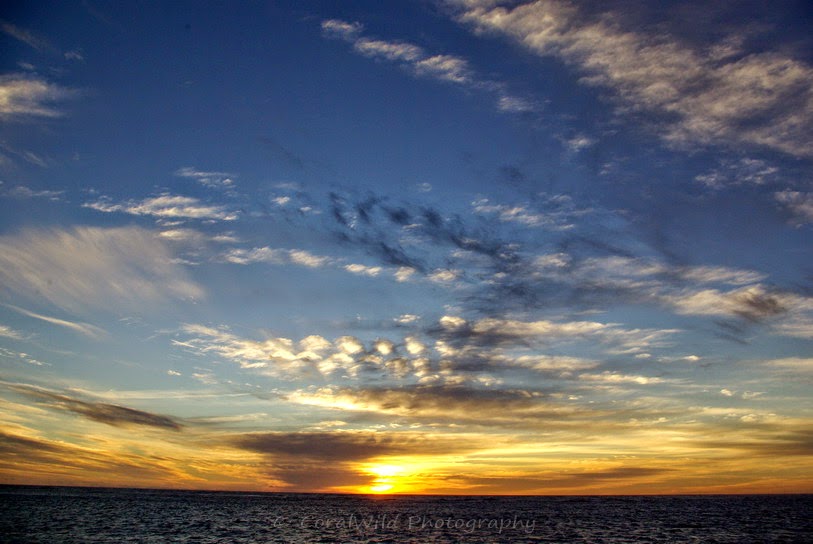
Dawn over Western Australia

I've had "bloggers block".......... Struggling to put a post together because I feel I ought to commemorate the changing of the year, but heart and inspiration have been sadly absent!

There have been so many amazing and memorable moments in 2014 that it's that much harder to choose what and how to summarise for a readable posting.

So after a week or two of dithering and experimenting I've finally decided to go with a post that I've been working on intermittently over the last 4 months or so.


I spent an unforgettable 6 weeks in Australia earlier in 2014 and I still haven't posted more than a fraction about that trip. I have folders and folders of photos that I haven't even reviewed or categorised yet!

So today I'm going to post about the amazing sailing/diving trip I did on Ningaloo Reef, north west Australia.

Ningaloo Reef is a key component of the Ningaloo Marine Park and Ningaloo Coast World Heritage Site. It's the largest fringing coral reef in Australia and currently is most well known as THE place to go and snorkel with Whale Sharks.

for more info click on this link....
Wikipedia - Ningaloo_Coast

An old friend of mine owns and manages (with his wife) a beautiful catamaran yacht "Shore Thing", which does 3 and 5 day sailing, snokelling and diving trips out from Coral Bay along the Ningaloo Reef.

see their homepage by clicking here...
Sail Ningaloo 
"Shore Thing" at Coral Bay


So when I knew I was going to be flying to Australia for a family wedding I made plans to also visit Western Australia and dive Ningaloo!


Jetty & Boat Ramp, Coral Bay


The Coral Coast from the air


The Ningaloo Coast is fairly typical of North West Western Australia - arid, low lying, tree-less with the only notable features being occasional red sand dunes interspersed by low lying salt flats or lakes. But beneath the clear, warm waters of this coral coast it's a whole other story.....


Amongst the exquisite, multi-coloured coral reefs we saw manta rays, turtles, sharks, shoals of brilliant reef fish and a host of smaller creatures.

Manta Ray


Amazing underwater landscapes....


Green Turtle
Sea urchin


Christmas tree worms


There weren't just the mega fauna and "reefscapes" of course, but an infinite number of smaller sea creatures could be found if you looked close enough.

This was a challenge on almost every dive - having to take turns in admiring the reef "big picture" with looking for the little stuff.......


Nudibranch


Giant Clams of all sizes & colours could be found

 Of course we didn't spend the whole day diving or snorkelling.

The food was absolutely amazing.
 
The company fun and interesting, the sea calm and sheltered behind the reef,

and I'm always happiest being out on the ocean blue, especially sailing, at any time!

relaxing on the stern deck
Crew & divers on the "bridge"

filling dive cylinders


Daniela, our amazing cook


Sundowners & sunsets

 If you're ever in Western Australia I can highly recommend experiencing Ningaloo Reef with Luke, Lannie and their crew at Sail Ningaloo.

You don't have to be a scuba diver as most of the best reefs can be done snorkelling. They also do beach and land excursions although we hadn't enough time between dives on our particular trip.

The hospitality, food and friendliness cannot be faulted.

It was really a major highlight of my Australian trip.

PS - I didn't go diving/snorkelling with Whale Sharks. It's strictly regulated and and only a few operators run those trips. As I've been very very lucky to have snorkelled with Whale Sharks in both the Seychelles, Mozambique and South Africa (Whale sharks on our East Coast) I didn't feel the need to pay the extra in both cash and time.

But I have heard that the trips are excellently run and well worth it if you dream of that particular wildlife encounter!


Saturday, July 13

A Diving Safari to the Pacific Islands

 I've been quiet on the blogging front recently but I have had a great excuse!!
Those few of you who are also "Facebook friends" may already know why - if you've seen ALL the pictures.....
Last July, a diving friend of mine, Rosemarie, asked if I was keen to join her and her husband John on a diving trip to Truk Lagoon in the Pacific Ocean. I didn't even hesitate - the answer was yes.
When I first started diving, whilst at college in the UK 35 years ago, I had heard about Truk. In those days, most British divers were "wreck crazy" and Truk was a "dream" destination. When I say "dream", I don't mean the balmy, palm fringed beaches type of dream, but rather an extremely remote and highly unlikely place to ever get to, but a "mecca" never the less. In those days I don't think you could fly in to Truk, and certainly many of the ship wrecks hadn't yet been charted.
But time passes by and destinations once extremely remote are now easier (though not much cheaper) to get to. I had also, in the intervening 35 years, been lucky to do a few wreck dives, both in the Red Sea and here in South Africa, and I knew it was a type of diving that I really enjoy.
So, the immediate answer was yes to Rosemarie's question:) We just needed to set the date.
A bit of background.......
After WW1, the Japanese were mandated a significant number of the Pacific Island groups, Truk included. In secret (in violation of the mandate) they built a significant naval base at Truk and after they joined WW2 this was a key base for them in the Pacific. The Americans decided against a land invasion of Truk (it was considered to be fairly impregnable to land/water based attack) and to attack it from the air instead. One of the American reconnaissance flights was spotted by the Japanese early in Feb 1944 and most of the Japanese naval vessels (carriers, destroyers, battleships etc.) were sent on to Palau. However, when the Americans did attack (Operation Hailstone) there were still a significant number of auxiliary and support ships in the lagoon. During Operation Hailstone and several more attacks during 1944, over 36 ships were destroyed / sunk in the lagoon.
 Truk (now called Chuuk) lagoon is a bit like a large lake in the middle of the ocean. It's barrier reef provides significant shelter and the scattered islands provide sheltered anchorages within the lagoon. This combined with its remote location (off the tourist/diver) route, has meant that the shipwrecks have been relatively untouched by time (and humans) - except for the amazing coral growth on the shallower vessels..... Even now, there are only 3 flights in a week, and approximately 5000 tourists a year.

The corals on the sunken fleet are quite amazing, but the only reason one makes the lengthy trip to get to Truk is the wreck diving -  I did 20 dives in the 7 days we were there, 19 of which were on wrecks, and we didn't see even a fraction of what could be done. (It's a bit like my safari guests coming on a "once in a life-time" 3-4 day safari to Kruger - one has brief encounters with some of the major highlights, but that is just scratching the tip of an elephants tail hair, if you know what I mean).
 Some of the tourist brochures for Truk talk of the "Ghost Fleet", and believe me, it is truly an eerie experience in many respects. There are still some human remains scattered amongst the other day to day artifacts that litter the decks and holds of the ship wrecks, plus many torpedoes, submarine parts, aircraft parts, tanks, bull dozers, truck chassis, weapons, mines, blankets, saki bottles, shoes............
 To add to the overall experience, the Captain of the SS Thorfinn (which was our home and base for the 7 days in Truk) has been in the area for over 30 years. So over every meal we had interesting and entertaining tales about the islands, Operation Hailstone, the shipwrecks and how they were sunk, his own history leading up to Truk etc. etc.  His knowledge and stories really brought those ships and the Japanese history in the islands to life.
Well, sadly (I could have spent much much longer diving those wrecks) we eventually had to start heading back home.
As a group (there were 4 of us who eventually went on this trip) we had decided to do an "add-on", which was a 3 night / 2 diving days stop in Palau on the way back.
Absolutely wonderful!!
First of all, it broke up the very long journey home, but best of all we got another 5 dives on some of the most renowned reefs in the Pacific Ocean.

Sharks, turtles, multitudes of colourful reef fish, blue reef walls, glorious corals, jungle clad islands, blue/green lagoon waters, and on the last non-diving day, a fascinating land tour of the islands.
The highlight of this "stopover" for me was our 5th and last dive - Chandelier Cave. A mostly submerged limestone cavern with stunning stalactites both above and below the water line.......unforgettable.
Well, that pretty much sums it all up.

To dive Truk Lagoon has been a vague but persistent murmur in my sub-conscious for over 30 years, and now I have amazing memories (and photographs) which will never dim or fade.

I'm still coming down from the high:)


Thursday, December 27

A Kruger intermission, an underwater sojourn

Sodwana Bay, viewed from Jesser point


After a year of working quite hard on safari I was definitely missing my “alternate” world – under the sea.....

So when I realised that I was not working over Christmas (for the first time since 2007) I immediately made plans to go diving.


I hadn't been on the reefs of Sodwana Bay for almost four years and as one could, at a stretch, say it was on the way to Durban, where I planned to visit my extended family, well, it was the obvious diving destination.

Blue-lined & Yellow snapper


My timing was good, the sea has started getting warmer, there were enough divers around to make up a boat load of “advanced” divers to visit further reefs, but not yet the school holidays, so I could get some “off-season” discounts (plus the beach wasn't too crowded).

And, wow, I had forgotten just how glorious the diving at Sodwana can be!

Here are just a few of my photos, but they cannot really give you a feel for what we experienced:-


Paper Fish


The gorgeous, colourful hard and soft corals, sponges, anemones, clams and fish that proliferate on the reefs stretching north of Jesser Point;


Two-bar anemone fish


 The large manta ray swooping over and around us for most of another dive;


Ribbon Eels


Five different types of moray eel one afternoon, including the “cheeky” black-cheeked moray that nipped my hand as I struggled in the surge to take a photo of another;


The brilliantly coloured, tiny nudibranchs dotted almost everywhere we looked;


A view through one of the many arches on the reefs


A school of dolphins circling us playfully as we snorkeled with them after one dive;

Turtle tracks etched on the dunes as we skimmed past every morning;

The majesty of a large “raggie” shark winding away from us;

 And, at the end of a long morning's diving, that unique post-dive state of exhausted euphoria.


Ribbon-tail Ray

Giant clam

After that wonderful, diving break I am back to Kruger Park tomorrow, totally refreshed by almost 9 hours of immersion in the Indian Ocean, and ready for the bush again :)

I hope you have all had a happy festive season, and best wishes for 2013.